FLEXIBLE ASSEMBLY PLATFORM

CAJC Flexible Assembly Platform

Let the product change,
Become a daily routine that you can deal with calmly.

For the needs of picking and placing auxiliary materials, loading and unloading of workpieces, and assembly of pallets and carriers, we plan assembly solutions around your workpieces to make new product introduction, repeated changeovers, and daily operations more orderly.

High-mix manufacturingChangeover & ReuseFor long-term use
Communicate process needs
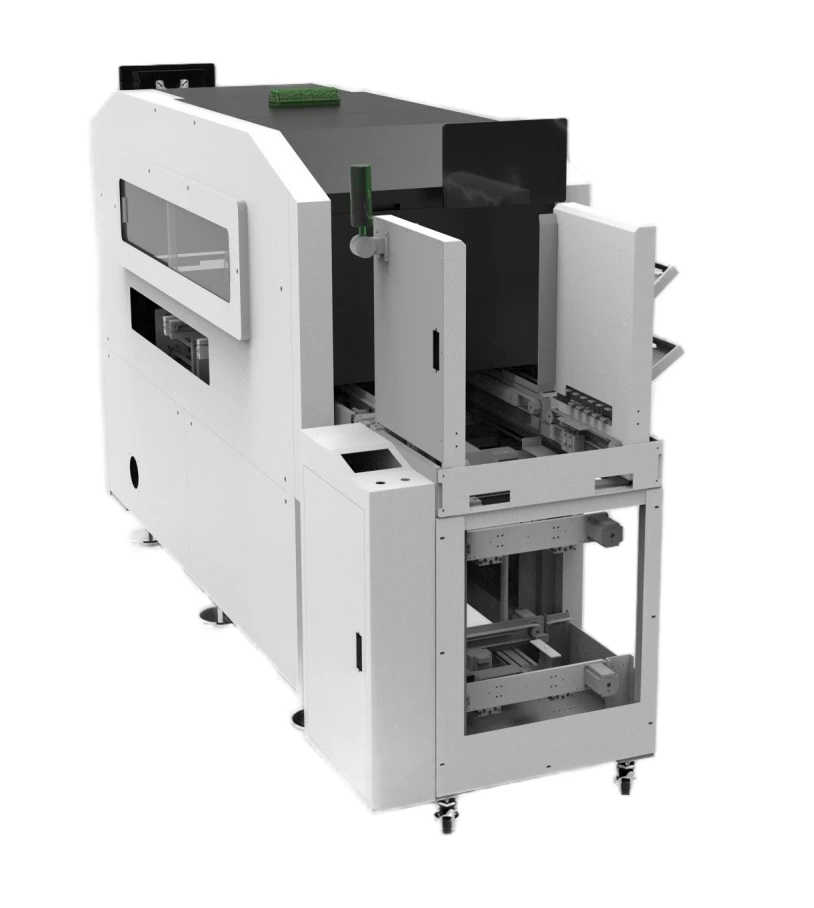
CAJC Flexible Assembly Platform — Product Visualization
The appearance scheme of the equipment is shown, and the specific configuration is confirmed by project.

APPLICATIONS

Make repetitive assembly steps more orderly.

Starting from the specific process, evaluate the scope of operations suitable for automation, and then determine the material supply, tooling and acceptance requirements.

Conceptual illustration of auxiliary material pick-up, placement and placement applications
Application concept illustration
01

Auxiliary Material Pick-and-Place & Application

Faced with the repeated process of taking materials, identifying directions and placing them, the assembly plan was discussed around the form and placement requirements of the auxiliary materials.

Focus on: incoming material form, pick-and-place conditions, placement location and quality requirements.
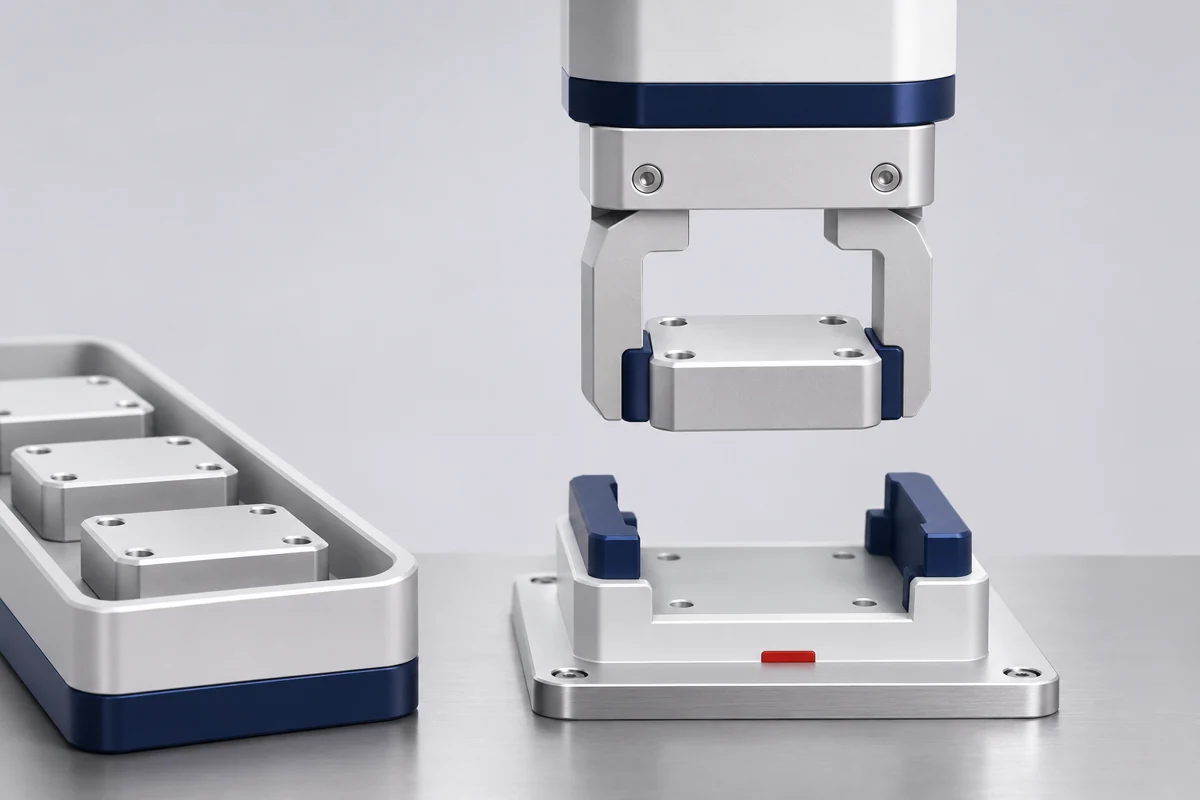
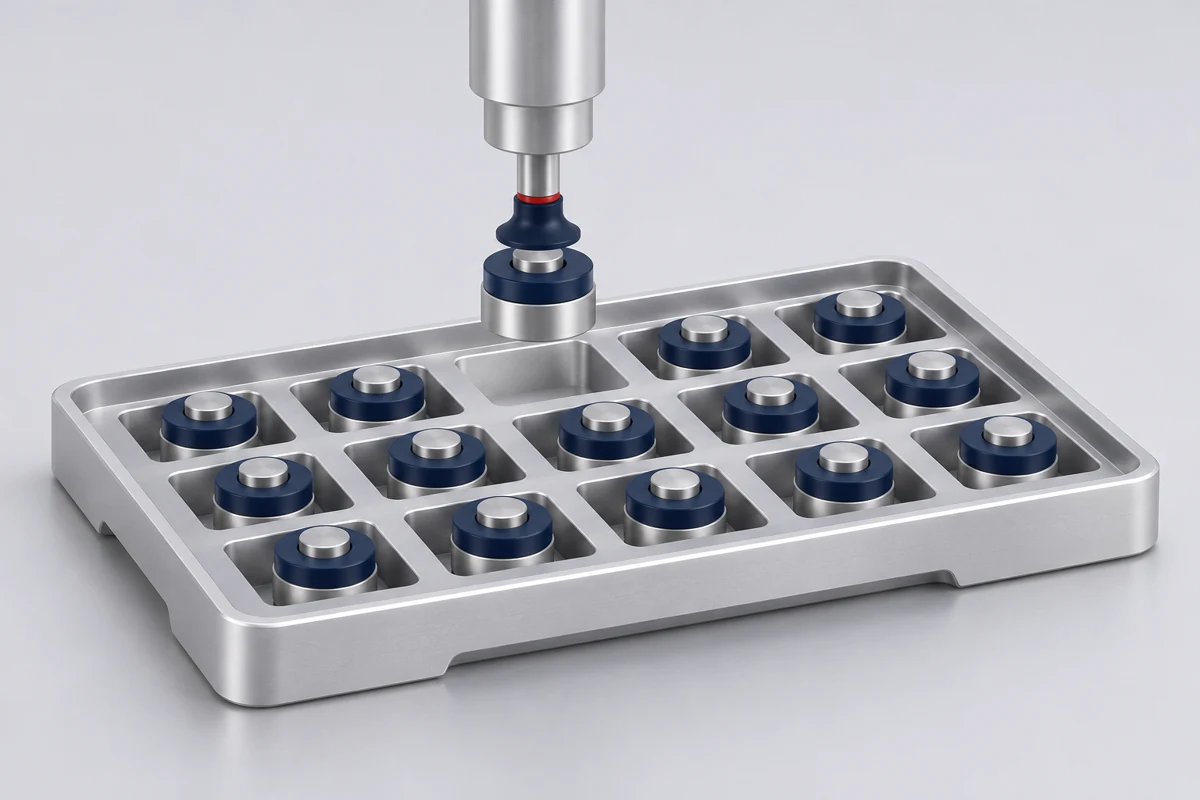
Concept illustration of workpiece loading and unloading application
Application concept illustration
02

Workpiece Loading & Unloading

Plan repeated handling and placement operations around the supply location and target workstation to help sort out the division of labor between personnel and equipment on site.

Focus on: workpiece protection, workstation connection, rhythm and abnormal handling.
Concept illustration of pallet and carrier assembly application
Application concept illustration
03

Tray & Carrier Assembly

Faced with the placement and assembly requirements of similar components in multiple locations, evaluate configurations around changes in pallets, carriers, and products.

Focus on: product family, location layout, changeover frequency and assembly results.

Stay tuned for more scenes

Application adaptation needs to be evaluated in conjunction with actual workpieces. Other processes can be communicated separately, and the scope of delivery shall be subject to the confirmed project plan.

ONE PLATFORM · DIFFERENT PROCESSES

Combining appropriate tasks around product processes.

From picking, placing and placing auxiliary materials and components to dispensing glue, locking screws and process verification, the process combination is selected according to the actual product. This provides a basis for repeated operations and leaves room for adjustment for subsequent product changes.

01

Pick and Place

Focusing on components, accessories and placement locations, confirm the incoming material method, pick and place conditions and placement requirements.

02

Placing and loading and unloading

For the circulation of pallets, carriers and workstations, plan product protection, location layout and personnel division of labor.

03

Dispensing glue and locking screws

Evaluate the dispensing or tightening process according to the connection and assembly requirements, and confirm the quality and rhythm based on the sample parts.

04

Check and record

Configure visual verification, barcode recognition and work records according to project requirements to facilitate first-piece verification and subsequent review.

The above are the process directions listed in the brochure, and the configuration and sample adaptation need to be confirmed separately; it does not mean that each device includes all processes by default.

Product three-dimensional rendering · Multiple machines arranged side by side

FLEXIBLE DEPLOYMENT

From a workstation,
to multiple work units.

According to the order, process division and on-site space, plan to use a single machine or arrange multiple machines side by side. When products are changed, priority is given to assessing the scope of use of existing data, tooling and equipment, and then determining the need for new preparations.

Consider changeover, maintenance and personnel circulation space together to make the layout closer to daily production.

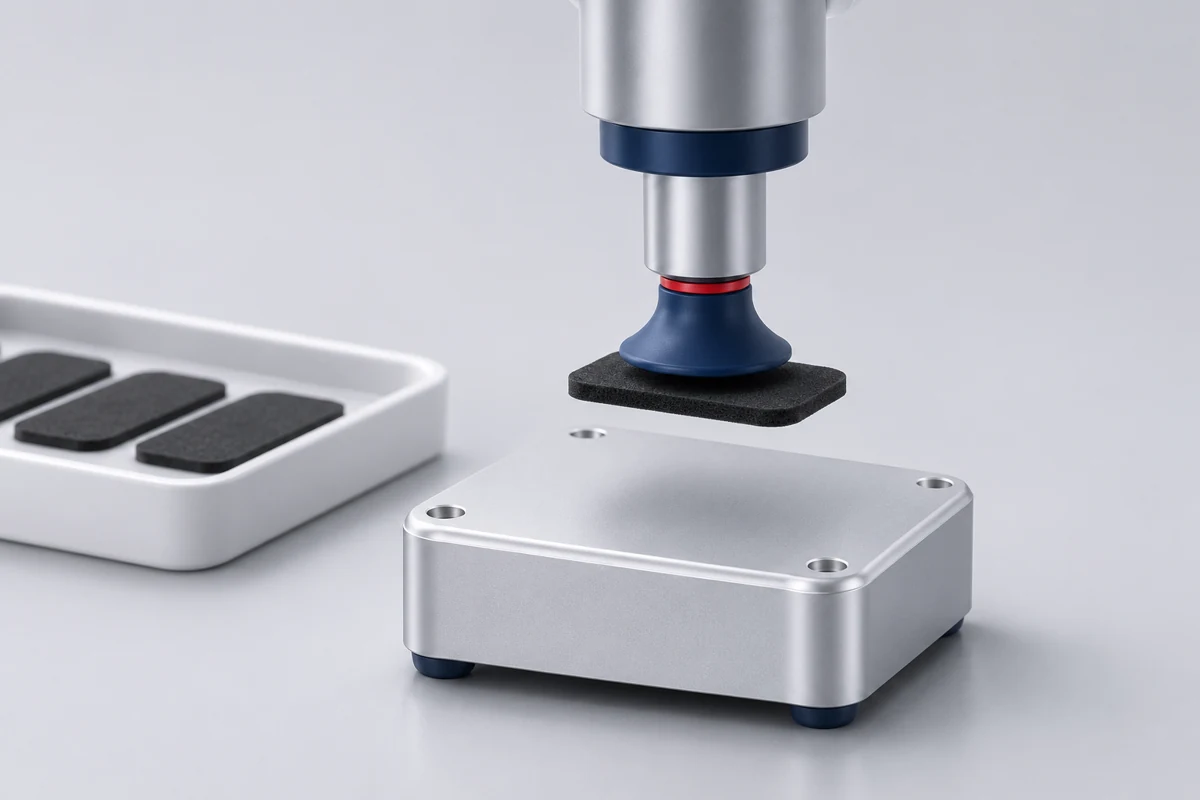
Appearance display of workhead · Modified based on actual photos

INTERCHANGEABLE WORKHEADS

Change the workhead,
expand your process capabilities.

The workhead is one of the core components of flexible assembly equipment. By replacing different workheads and matching the corresponding tooling, feeding and operating procedures, the same platform can be adapted to different production tasks.

platingPaste accessoriesMore capabilities coming soon

Focusing on the needs of placement and auxiliary material placement, select the appropriate work head and supporting configuration to make product preparation, process switching and first-piece verification more orderly. More job functions will be added gradually.

Discuss Workheads & Process Requirements

Change styles and prepare around tasks

Replace the work head according to the process, and check the tooling, incoming materials and operating procedures. After confirming the sample and first article, we can enter production.

Reuse, pay attention to existing investments

When products or processes change, priority is given to evaluating the scope of use of the platform and existing supporting facilities, and focusing new investments on the parts that need adjustment.

Expansion, combined with follow-up planning

Sort out the current and subsequent processes in the planning stage to prepare for the selection, maintenance and process verification of different work heads.

The picture shows the appearance of the workhead and does not correspond to all models of the above processes. Each process needs to select a workhead and supporting configuration separately and pass actual product verification; it does not mean that a single workhead or standard equipment includes all processes by default.

FROM WORKSTATION TO PRODUCTION

Put assembly back into the complete production process.

In complete line planning, assembly units are evaluated together with front- and back-end equipment, inspection, and material turnover. Organize the process based on product flow direction and target rhythm to make the connection between loading and unloading, processing and result confirmation clearer.

Production line planning diagram · Displays equipment combination and layout direction, and does not represent the delivery quantity or actual production capacity of a specific project

better prepared

Organize product information, supply materials and tooling conditions in advance, and discuss applicable methods for offline preparation and first-piece verification.

There is a basis for changeover

Check the location, job content and configuration changes against the product family, and clarify the reusable content and re-validation scope.

Run collaboration well

Confirm status inspection, exception prompts and recording requirements according to the project, and incorporate operation, maintenance and follow-up review into delivery.

EQUIPMENT IN PRACTICE

From product plan to manufacturing site.

On-site photos show the appearance of the equipment, operating position and organization of surrounding materials, providing an intuitive reference for equipment placement, personnel operation and communication on loading and unloading materials.

Real shots of the equipment on-site · Oblique perspective and surrounding material layout
Real shots of the equipment on site·Connection between front operation and work station

Photo provided by company, client name withheld. There are differences between the on-site configuration and the brochure, and the specific equipment and delivery scope are subject to the project plan.

SELECTION REFERENCE

Let’s first look at the adaptation range.
Check the site conditions again.

The following is a combination of product information and confirmed parameters for preliminary selection communication. Configuration, supply form and process combination will affect the scope of application; size and performance should be confirmed through project drawings and sample verification.

Selection itemsSelection referencePlan confirmation key points
Overall dimensions800 × 2330 × 1650 mmThe overall dimensions of the equipment are marked in width × depth × height. Space for maintenance, operation and external supply needs to be reserved separately, and the specific layout is subject to the confirmed plan.
Monorail product dimensions50 × 50 to 450 × 550 mmCombined with product appearance, positioning and protection requirements assessment.
Double track product size50 × 50 to 450 × 300 mmConfirm track configuration, tooling and work space.
Pallet feeding referenceTRAY disc smaller than 420 × 310 mmCheck the tray type, incoming material status and feeding method.
weight/powerApprox. 950 kg / 3000 WAccording to the equipment parameters in the brochure; the final transportation, carrying and power supply requirements are subject to the delivery configuration.

The cycle time, accuracy and changeover time in the brochure depend on configuration and verification conditions, and this page does not serve as a unified commitment for all products. Welcome to provide samples, process flow and production arrangements to jointly confirm applicable indicators.

Discuss product and layout requirements

EVERYDAY CONVENIENCE

Make everyday production easier.

The value of equipment is also reflected in every aspect of preparation, changeover, operation and maintenance. We plan solutions and verification content based on on-site usage requirements.

New product introduction, with clear preparation path concept
01

New product introduction, with clear preparation path

Starting from the sample, supply and assembly requirements, it is clear what needs to be prepared and verified so that there is a common basis for process communication and first-piece verification.

Repeated changeovers, paying attention to the concept of reuse of existing investments
02

Reuse existing resources for repeat changeovers

For similar products, evaluate the product information and tooling configurations that can still be used to reduce the work of sorting out from scratch for each change. The specific reuse scope needs to be verified.

For daily use, consider the concept of operation and maintenance together.
03

For daily use, consider operation and maintenance together

Simultaneously confirm personnel operation, exception handling, inspection and training requirements during plan communication, and make ease of use a part of the delivery evaluation.

VALUE OVER TIME

See the long-term value after a single investment.

From equipment procurement, it extends to high-mix production, personnel collaboration and subsequent adjustments. The following are value directions in project evaluation, actual benefits depend on process adaptation and usage conditions.

Reduce duplication and prepare value indicators
01

Reduce duplication of preparation

Plan changeoverovers based on reusable product data and tooling conditions, and strive to reduce repeated preparation and re-confirmation work.

Accumulating experience value that can be used
02

Accumulate experience that can be used

The sample verification, operation points and acceptance basis are stored as on-site data to provide reference for subsequent similar products.

Reserve space value for product changes
03

Leave room for product changes

Discuss the product family and subsequent changes during the planning phase, and evaluate the extent to which existing equipment and configurations can continue to be used.

Pay attention to the full cycle investment value indication
04

Focus on full-cycle investment

Incorporate the impact of tooling, changeover, training, maintenance and downtime into the assessment to more completely judge the value of equipment investment.

Income, return to your actual working conditions to calculate.

Combined with the current labor investment, order and changeover frequency, available production time, quality requirements and maintenance costs, the suitability and investment recovery expectations are evaluated through sample testing and solution comparison.

AssemOS

Let the production preparation and processing process,
Better clarity and better collaboration.

Next-generation software experience · V4 planning direction

AssemOS focuses on continuous planning around production preparation, product changeover, exception handling and maintenance records. The goal is to let operators know the next step and make it easier for the engineering team to find the basis for processing.

Specific functions and delivery scope are confirmed on a project-by-project basis. Welcome to discuss with us a suitable operating experience based on your on-site usage habits.

START WITH YOUR PROCESS

from an artifact,
Start evaluating next steps.

Provide photos or drawings of the workpiece, feeding method, assembly steps, target cycle time and quality requirements, and we will discuss suitable solutions and verification conditions together.

Communicate process needs
  1. communication scene

    Sort out existing operations, product changes, and areas you want to improve.

  2. Sample evaluation

    Confirm the adaptation conditions of key processes and issues that need to be verified.

  3. Confirm plan

    Develop a common ground around configuration, acceptance, training and subsequent use.

Questions you may be concerned about

Which products are suitable for use?

Prioritize communication around auxiliary material picking and placement, workpiece loading and unloading, and pallet and carrier assembly requirements. The scope of application needs to be evaluated based on the workpiece, supply materials and quality requirements.

Can the equipment continue to be used after the product is changed?

Product families and possible changes can be clarified during the planning stage, and reusable data, tooling, and configurations can be evaluated; new products still need to complete on-site verification and process verification.

How to judge the tempo and investment recovery expectation?

Plans are compared based on actual products, production arrangements and cost inputs, and then applicable indicators and acceptance conditions are determined through sample testing. Unified revenue figures are not used to replace on-site evaluations.

Does AssemOS V4 include all introduced capabilities?

The software experience on this page belongs to the new generation planning direction. The specific deliverable functions and configurations are subject to the project confirmation content.

Explore CAJC

Products · Solutions · Technology · Services

Product interface

Interface screenshot · Data is for display only

Privacy Statement

The current version of this website does not have user accounts, ad tracking or data collection forms set up.

Consulting tools organize email content within your browser. Clicking "Send using email client" will open the email application on your device, and the email will be sent to public@cajc.cn after your confirmation.

Please do not send confidential information or sensitive project files via regular mail. For information exchange methods, please communicate with us first.