
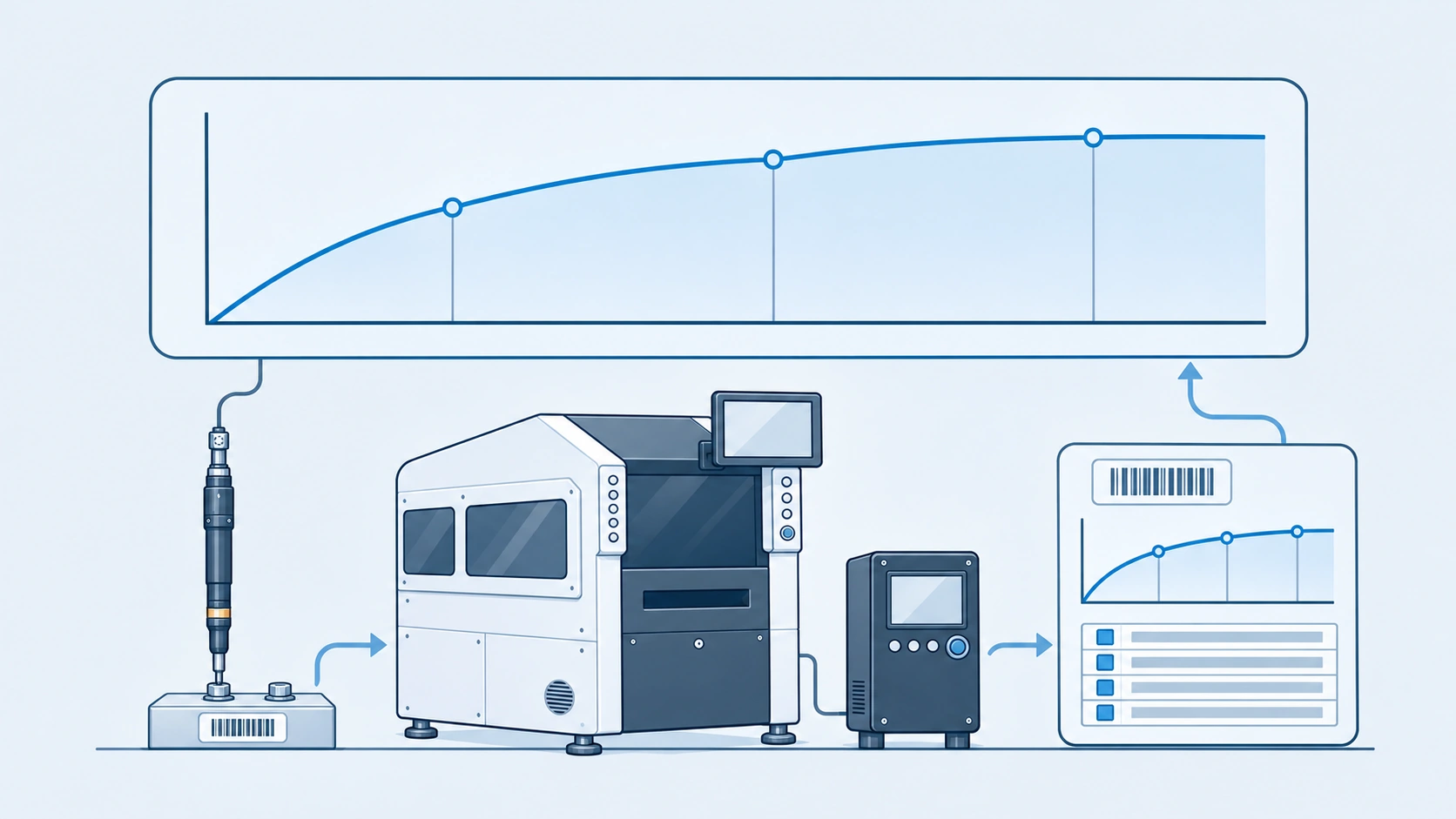
Beyond the results, focus on the process
Whether one-time tightening is stable, in addition to the final result, also needs to be analyzed based on joint characteristics, process strategies and process curves. Establishing a unified data recording method will help the engineering team trace anomalies, compare working conditions and continuously improve.
Define the process first, then configure the tools
Tool selection should be based on connectors, materials, torque requirements and working space, as well as on-site tempo, personnel operation and traceability requirements. Sample verification is an important link between product capabilities and real working conditions.
Let data return to the manufacturing site
Correlating the workpiece identity, tightening results and equipment status can provide a common basis for quality review. The value of data is to help locate problems and verify improvements on site, not just to form a report.